From the founder
The ugliest house in Sea Ranch
How an IPO, a DJ, and a $550K+ tax bill led me to build a cost segregation platform.
Bola Akinsanya · Founder, Unlevered · July 7, 2026
It was December of 2020. I was on maternity leave, sitting in my living room, waking up early to watch an IPO that just six months earlier we did not believe would happen. My text thread with my work wives was lit up. We were so excited. And at some point, the topic turned to taxes.
I remember thinking that not long before, I had been worried about not having enough savings. Now I was doing a very different kind of math. The tax bill that year came to roughly $560K between federal and California, and my paychecks had only covered about two thirds of it. A first world problem, absolutely. Also a real one. If I recall correctly, I borrowed money to pay the difference.
| Combined W-2 wages | $1,328,022 |
| Federal income tax (2020 MFJ brackets) | ≈ $419,300 |
| Federal withheld from paychecks | $288,796 (69% of the bill) |
| Owed at filing, federal | ≈ $132,000 |
| California liability (est.) | ≈ $134,500 |
| Full-year federal + CA bill | ≈ $564,000 |
Fast forward two years. I still had not sold any Airbnb stock, because I was worried about capital gains. I was not doing anything schmancy like borrowing against it, but I knew I wanted to diversify. I just was not sure when, or how to maximize how much I could keep and reinvest.
Then I went to a host event. I was the head of core hosting for North America at the time, and my community team was bringing events back after the pandemic. One of our ambassadors, I will call him DJ Mike, ran a portfolio doing about $3 million in revenue. And DJ Mike told me, to my face, that my events were kind of boring. I asked him what he wanted to talk about. He said cost segregation. Building out his portfolio. He said, you are talking to me about Instant Book.
I was embarrassed. I was the head of Core Host, North America, and I had literally no idea cost segregation was getting ready to fuel expensive category growth.
So I went home and started researching, and I fell straight into tax YouTube. And to be fair, some of it checked out. But I could not bring myself to make an internet personality my tax advisor, so I paid my CPA’s consulting fee and asked him directly. And sure enough, he confirmed the opportunity was legal and that they could facilitate it through a cost segregation study.
Then life happened. I got pregnant with my daughter, my husband lost his job, and we made the difficult decision: not right now. I was biding my time, but also chasing the creative pull of finding a home, gutting it, designing it, and hosting again.
That fall I started looking at Sea Ranch. A friend who had done a house up there introduced me to her designer friends, and we found this really ugly house. Truly, the ugliest house. Prices were low, interest rates were high but starting to come down, and I remember the exact thought: I will be sitting on a gold mine, and if I do the remodel right, the tax rules will help me get my money back.
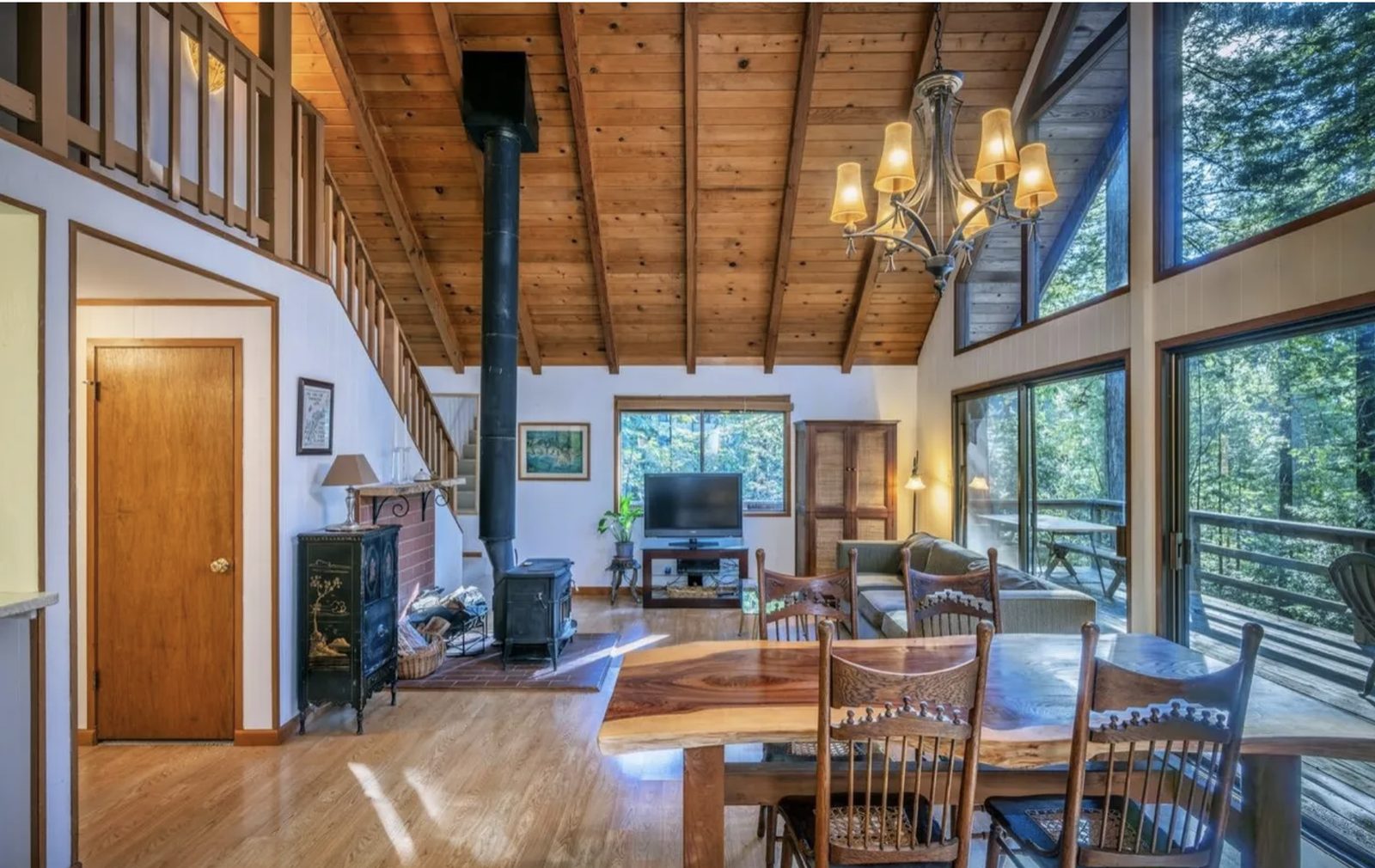
Here is where things take a turn, because I want to be precise about what I meant by that.
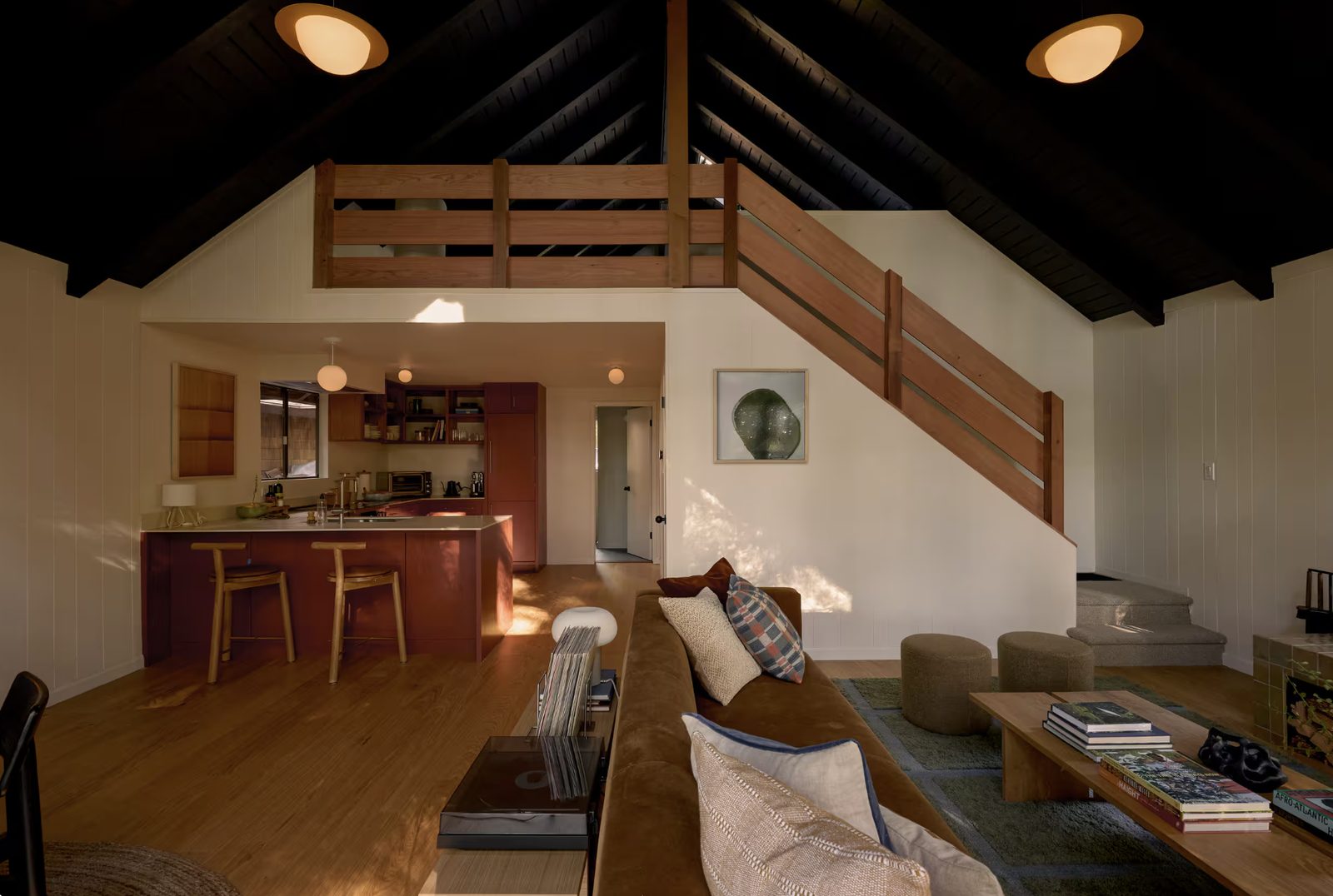
I bought the house for $837,500 and put 20% down, which is $167,500 in cash. I listed it on Airbnb and hosted while we planned the remodel. Then we broke ground. I put $388,000 into the remodel, and with the down payment, my cash into the house was $555,500. Bonus depreciation that year was 60%, per the §168(k) phase-down schedule, and my rough math said the deductions would hand a meaningful piece of that back against the stock I planned to sell. I went in with an estimate, not a hope.
And here is the part I did not plan. My cash into this house, $555,500, landed right around the tax bill from the IPO year, which ran roughly $564,000, driven by ordinary income plus capital gains. Roughly my entire tax liability for the year.
Midway through, my accountant and I worked out something that changed how we spent. Appliances, window treatments, furnishings, finishes: short-life property, deductions that come back quickly. The money buried in new pipes and a new septic system comes back much, much more slowly. So we got strategic. The Bosch package instead of the Whirlpool. Better window treatments. And every spending decision now ran against a running total: how much of the taxes I owed had we already put into the house, and how much room was left to put to work?

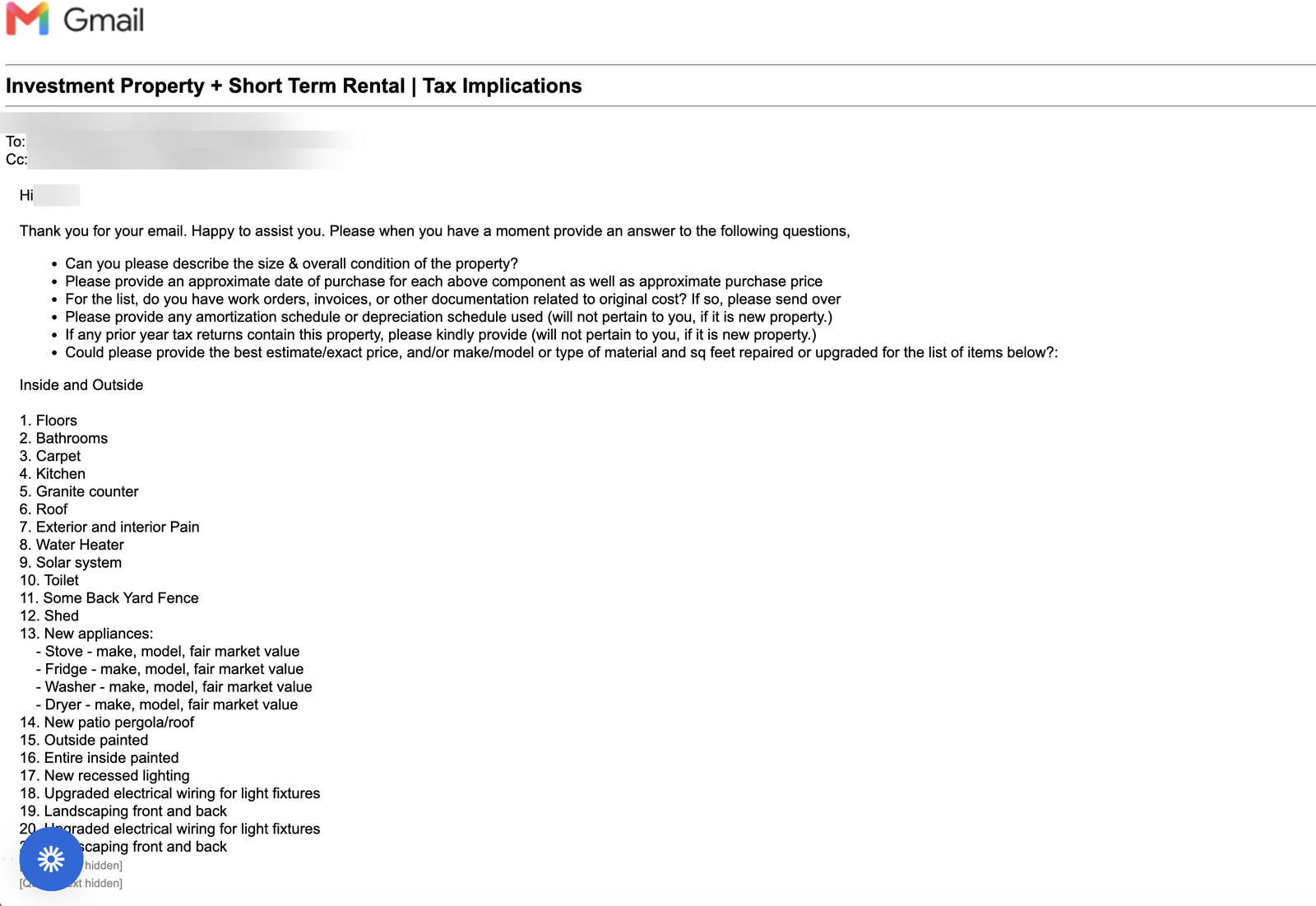
Then it was time for the actual cost segregation study, and it was one of the worst professional experiences I have ever paid for. The questionnaire arrived at the end of October, and it was very clearly a template. It asked about my granite counters, my solar system, my shed, and “some back yard fence.” The house has none of those. One item asked about “Exterior and interior Pain,” which honestly felt accurate by that point. Two items appeared on the list twice. And the substance of the ask was that I, the client, would estimate the price, make, model, and square footage of everything, so it could be assembled into a study.
Here is the part that still gets me. The study cost $6,600. Preparing my actual tax return cost $700. They made almost ten times more handing me a stack of paper with no math and nothing I could trace, than the people who prepared the return it was meant to support. A tax return shows its work. This did not.
Then came rounds of back and forth in which they missed the disposition entirely, the write-off for everything we had just torn out and replaced. That one turned out to be one of the largest deductions available on the whole return, and my old accountant left it on the table. We barely got the return across the line for April 15.
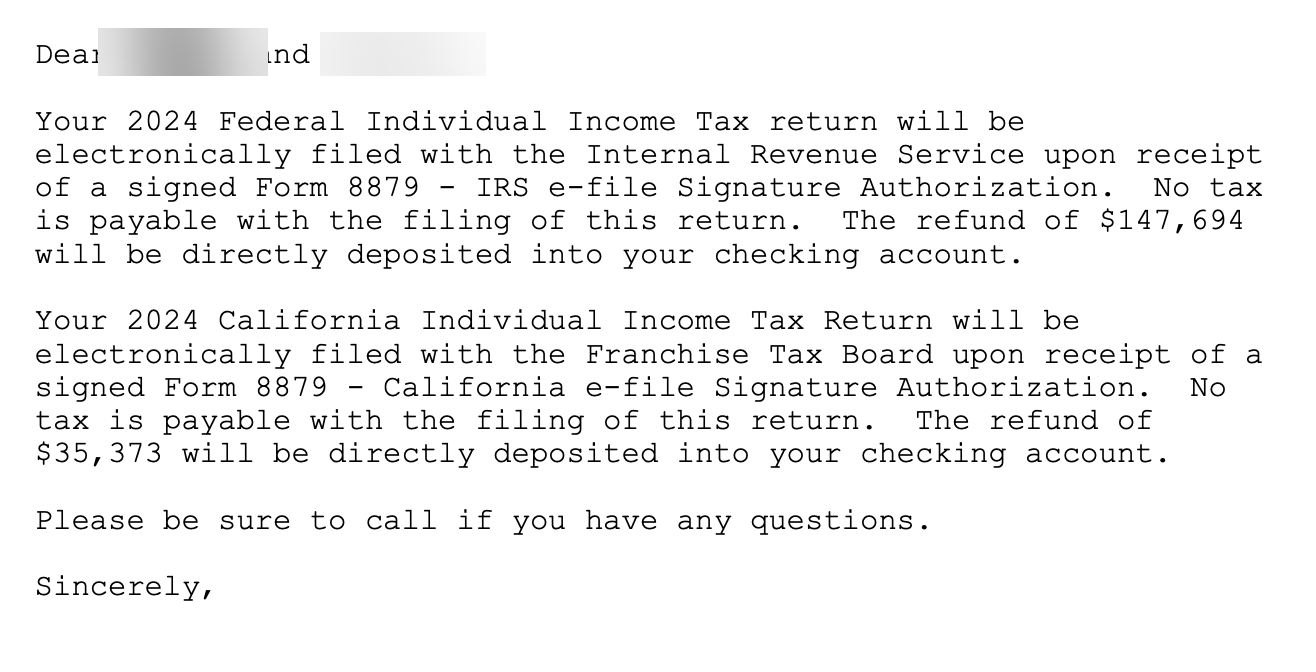
But we made it. And when the returns came back, the letter said no tax was payable with the filing. The refunds totaled $183,067: $147,694 federal and $35,373 from California.
I want to be careful about what that sentence means, because it is exactly where these stories go wrong online. The deductions cancelled out my income that year for real reasons. The house was a genuine short-stay rental, booked in stays of about a week or less. I ran it myself, and I kept track of my hours as I went. The refund was big because the house and the work behind it were big. The depreciation did most of the lifting, and other deductions I was genuinely owed filled in the rest.
These incentives are not an accident, and they are not partisan. Bonus depreciation, the piece that makes this work, was signed into law in 2017, and the treatment for short-stay rentals is older still. Both parties have built the code to pull money toward the things that create work. When I made this investment, I hired cleaners. I hired contractors to redo everything. Window washers. An electrician, a plumber, the septic crew. One person deciding to buy an ugly house and fix it up put real money into a small rural California town. That is the trade the code is making: I get an accelerated deduction, the town gets the work. Every line of it is the tax code working exactly as Congress wrote it. That was the part I could not stop thinking about. This was sitting in plain sight, in the actual law, and I ran a hosting organization at Airbnb without knowing it existed.
Fundamentally, I believe opportunity, information, and access should be democratized. Making a lot of money is not a bad thing. Wanting to create leverage from the money you make is not a bad thing. It is not a Republican thing or a Democrat thing. It is not political at all. It is math, leverage, and tax rules.
This whole experience made me want to understand how cost segregation actually works. My report told me nothing. But my background is in systems design and engineering. I rebuilt Airbnb Experiences’ taxonomy, so the idea of categorization, every component carrying a particular value, to be validated, licensed, or taxed in a particular way, is squarely my wheelhouse.
This is how Unlevered came to be.
This is a personal story, not tax advice. The figures are from the author’s own returns, with assumptions stated where they appear. Whether any of this applies to your household depends on facts a blog post cannot know, including qualification under the passive activity rules. Talk to your own tax professional. See our full disclaimer.