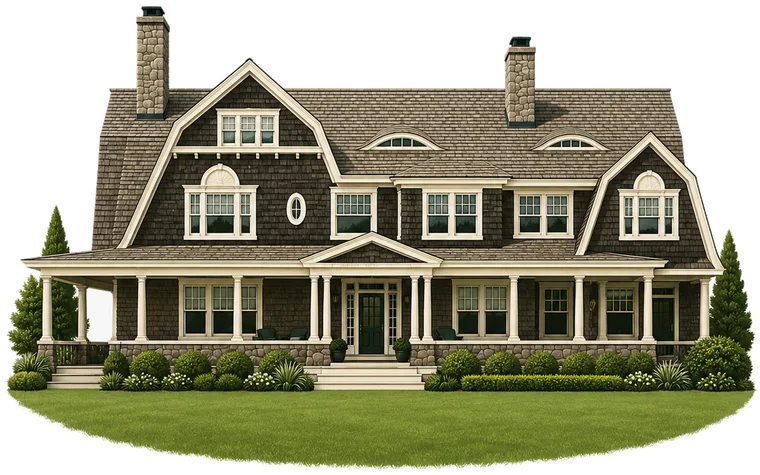
Cost segregation case study · Short-term rental

The Hamptons Estate

11 Dunemere Lane, East Hampton, NY 11937 · placed in service Jun 1, 2025
Purchase + remodel
$8.39M
Depreciable basis
$5.91M
Year-one deduction
$2.27M
ULV-2025-358CEngineered review passedView the full study →
The Hamptons Estate
Why this study reads the way it does

Inherited, then rebuilt: the renovation is the bonus engine

The estate passed to the owner at a stepped-up basis, then she gut-renovated it (new roof, full systems, kitchens, baths, and grounds) and runs it as a short-term and event-rental venue. Every dollar of that renovation is property she bought and installed, so it carries 100% bonus at the 2025 post-cutoff rate, and cost segregation moves 37.5% of the basis into 5- and 15-year lives.

The renovation drives the year-one number

$2.19M itemized spend · 100% bonus · year-one $2,270,178
The study reclassifies the renovation and the stepped-up shell into a $5,910,000 depreciable basis, then front-loads the 37.5% in 5- and 15-year property with 100% bonus: a $2,270,178 year-one deduction. The improvements the heir paid for are the engine; the stepped-up basis on its own would not earn bonus.

The new roof capitalizes: no disposition write-off

Re-roofed before the estate was placed in service
The roof was torn off and replaced as part of the renovation, before the estate was first listed. A component removed before a property enters service has no in-service basis to write off, so there is no partial-asset-disposition loss here; the new roof simply folds into the depreciable basis. Sequenced the other way, the old roof’s remaining basis would have been a separate deduction.
The lesson. Inheriting a property and renovating it are two different acquisitions for depreciation. The stepped-up basis doesn’t earn bonus, but the renovation you fund does, so the more the heir invests in the property, the larger the bonus-eligible pool the study can accelerate.
Where the cash went

$8.39M in, split into land, building, and remodel

The property was bought for $6,200,000 and remodeled for $2,190,000, $8,390,000 in all. Land never depreciates, so it's carved out first; everything else becomes depreciable basis the study then accelerates.

Where the $8.39M went

Every dollar in, by where it landed. Land never depreciates; building plus remodel is what the study accelerates.
$8.39Mtotal spend
Land (never depreciates)$2,480,000 · 30%
Building basis (from purchase)$3,720,000 · 44%
Remodel (capitalized)$2,190,000 · 26%
Building $3,720,000 + remodel $2,190,000 = $5,910,000 depreciable basis.
Inside the study

What the engine found

The deterministic engine separated the $5,910,000 depreciable basis into IRS recovery classes, then the engineered review confirmed every component against the source documents.

ULV-2025-358C
Engineered review passed · 32 components, 2 sources
Depreciable basis$5.91M
Short-life reclass$2.22M · 38%
Year-one deduction$2.27M

Component allocation

$5,910,000 depreciable basis across MACRS recovery classes.
$5.91Mbasis
5-year personal property$1,447,284 · 24%
15-year land improvements$771,629 · 13%
39-year building shell$3,691,087 · 62%
Residential rental building $2.49MCustom millwork: kitchen, b… $220KFull cedar-shake roof repla… $185KMarvin mahogany windows + F… $165KLandscape design: specimen … $160KCarpet and flooring (non-pe… $156KWindow treatments $156KCabinetry (non-permanent) $156K

Year one, in dollars

Accelerated depreciation, taken in year one.
Accelerated depreciation$2,270,178
Total year-one deduction$2,270,178
Straight-line without a study~$151,538/yr
About 15× more deduction pulled into year one than straight-line.

Depreciation by year

Year-one spike from bonus depreciation, then the building shell.
Year 1$2,270,178
Year 2$94,643
Year 3$94,643
Year 4$94,643
Year 5$94,643
Year 6$94,643
Year 7$94,643
Year 8$94,643
Year 9$94,643
Year 10$94,643
Year 11$94,643
Year 12$94,643
Year 13$94,643
Year 14$94,643
Year 15$94,643
Year 16$94,643
Year 17$94,643
Year 18$94,643
Year 19$94,643
Year 20$94,643
Year 21$94,643
Year 22$94,643
Year 23$94,643
Year 24$94,643
Year 25$94,643
Year 26$94,643
Year 27$94,643
Year 28$94,643
Year 29$94,643
Year 30$94,643
Year 31$94,643
Year 32$94,643
Year 33$94,643
Year 34$94,643
Year 35$94,643
Year 36$94,643
Year 37$94,643
Year 38$94,643
Year 39$94,643
Year 40$43,378
Method. Allocations follow the IRS Cost Segregation Audit Techniques Guide, Rev. Proc. 87-56, and MACRS (Pub. 946), with the 100% bonus rate (placed in service 2025) applied to qualifying 5- and 15-year property. The engine produces the figures deterministically; AI is used only to sort and extract from uploaded documents. Every line cleared the engineered review.
State tax treatment

What each state does with this deduction

Each state this study touches, classified by how it treats the federal year-one deduction.

New York (NY)Bonus decoupled
State still allows the deduction, but delays part of it.
$2,270,178
Federal year-one deduction
$379,303
New York year-one deduction
$1,890,875
Added back this year, recovered later

Lifetime difference: $0. Timing only, recovered in later years.

NY defers $1,890,875 of the deduction in year one, then returns it over the following years, reaching $0 by year 16. The lifetime deduction is the same; only the timing differs.

Deferred in year one Still to be recovered, by year

You still get the federal deduction now. New York taxable income is $1,890,875 higher than federal in year one, but that amount is deducted in later years.

Filing action

Use the federal schedule for the federal return and a New York recomputation schedule for the NY return.

Schedule: NY Form IT-398

Run on Unlevered · engineered review · ULV-2025-358C