The Willow Bend Condo
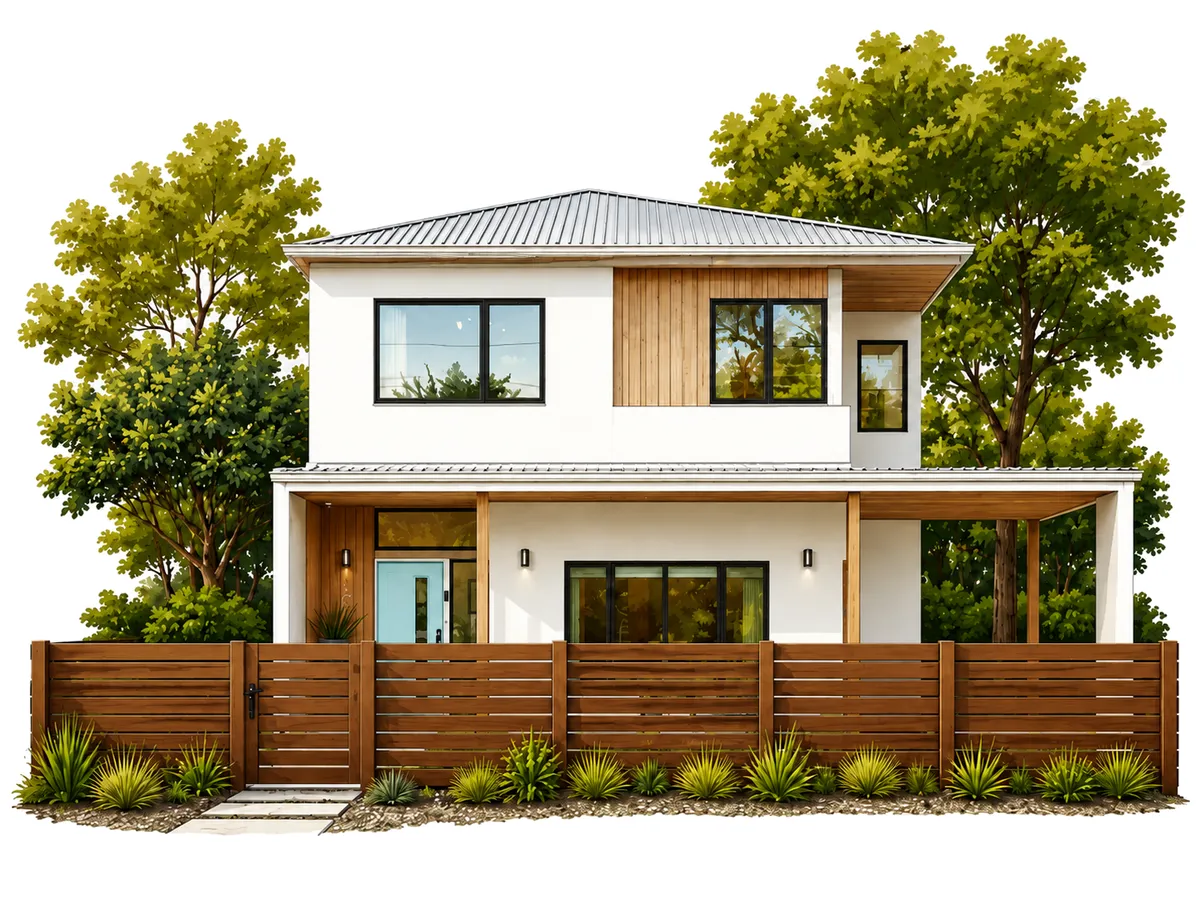
A condo is not a reason to skip cost segregation
This Austin unit is a condominium — the kind of property owners assume cost segregation can't touch, because "you don't own the land" or "it's all common elements." The deed says otherwise: the unit carries a 65% undivided interest in the regime's common elements, including the land. The study documents that interest instead of guessing around it, and books five never-depreciated years in one filing.
The land allocation comes from the regime documents
The owner's own floor plan drives the room map
Five sidelined years land at once
$790K in, split into land and building
The property was bought for $790,000. Land never depreciates, so it's carved out first; the building basis becomes the depreciable pool the study then accelerates.
Where the $790K went
What the engine found
The deterministic engine separated the $537,200 depreciable basis into IRS recovery classes, then the engineered review confirmed every component against the source documents.
Component allocation
Year one, in dollars
| Current-year depreciation | $10,386 |
| §481(a) catch-up (Form 3115) | $209,203 |
| Total year-one deduction | $219,589 |
| Straight-line without a study | ~$14,430/yr |
Depreciation by year
| Year 1 | $194,029 |
| Year 2 | $10,386 |
| Year 3 | $10,386 |
| Year 4 | $10,386 |
| Year 5 | $10,386 |
| Year 6 | $10,386 |
| Year 7 | $10,386 |
| Year 8 | $10,386 |
| Year 9 | $10,386 |
| Year 10 | $10,386 |
| Year 11 | $10,386 |
| Year 12 | $10,386 |
| Year 13 | $10,386 |
| Year 14 | $10,386 |
| Year 15 | $10,386 |
| Year 16 | $10,386 |
| Year 17 | $10,386 |
| Year 18 | $10,386 |
| Year 19 | $10,386 |
| Year 20 | $10,386 |
| Year 21 | $10,386 |
| Year 22 | $10,386 |
| Year 23 | $10,386 |
| Year 24 | $10,386 |
| Year 25 | $10,386 |
| Year 26 | $10,386 |
| Year 27 | $10,386 |
| Year 28 | $10,386 |
| Year 29 | $10,386 |
| Year 30 | $10,386 |
| Year 31 | $10,386 |
| Year 32 | $10,386 |
| Year 33 | $10,386 |
| Year 34 | $10,386 |
| Year 35 | $433 |
What each state does with this deduction
Each state this study touches, classified by how it treats the federal year-one deduction.
No individual income tax; the federal deduction is the whole story for Texas.
Common questions about this study
- What does a real cost segregation study look like?
- This is a complete, engineer-reviewed cost segregation study on a lookback property. Every figure is computed by a deterministic engine from source documents, cited to the underlying tax authority, and reproducible — including a 14-room component reclassification and a full depreciation schedule. Addresses and client identities are changed for privacy; the facts and dollars are true engine output.
- How much does this study accelerate into the first year?
- On a $790,000 property with $252,800 (32%) allocated to non-depreciable land, the study establishes $537,200 of depreciable basis and produces a $219,589 first-year deduction at 1% bonus depreciation. As a lookback it also captures $209,203 of previously missed depreciation as a §481(a) catch-up.
- Is a cost segregation study like this defensible?
- It is built to the standards in the IRS Cost Segregation Audit Techniques Guide: each component is classified with a citation, the basis derivation is engineered rather than estimated, and every calculation is reproducible. Unlevered prepares and signs the engineering study; the property owner's CPA remains the sole tax return preparer.
- What makes these studies transparent?
- Every number traces to a source. The study shows the room-by-room allocation, the reasoning behind each component's classification, and a calculation that can be reproduced from the same inputs — not a black-box estimate.