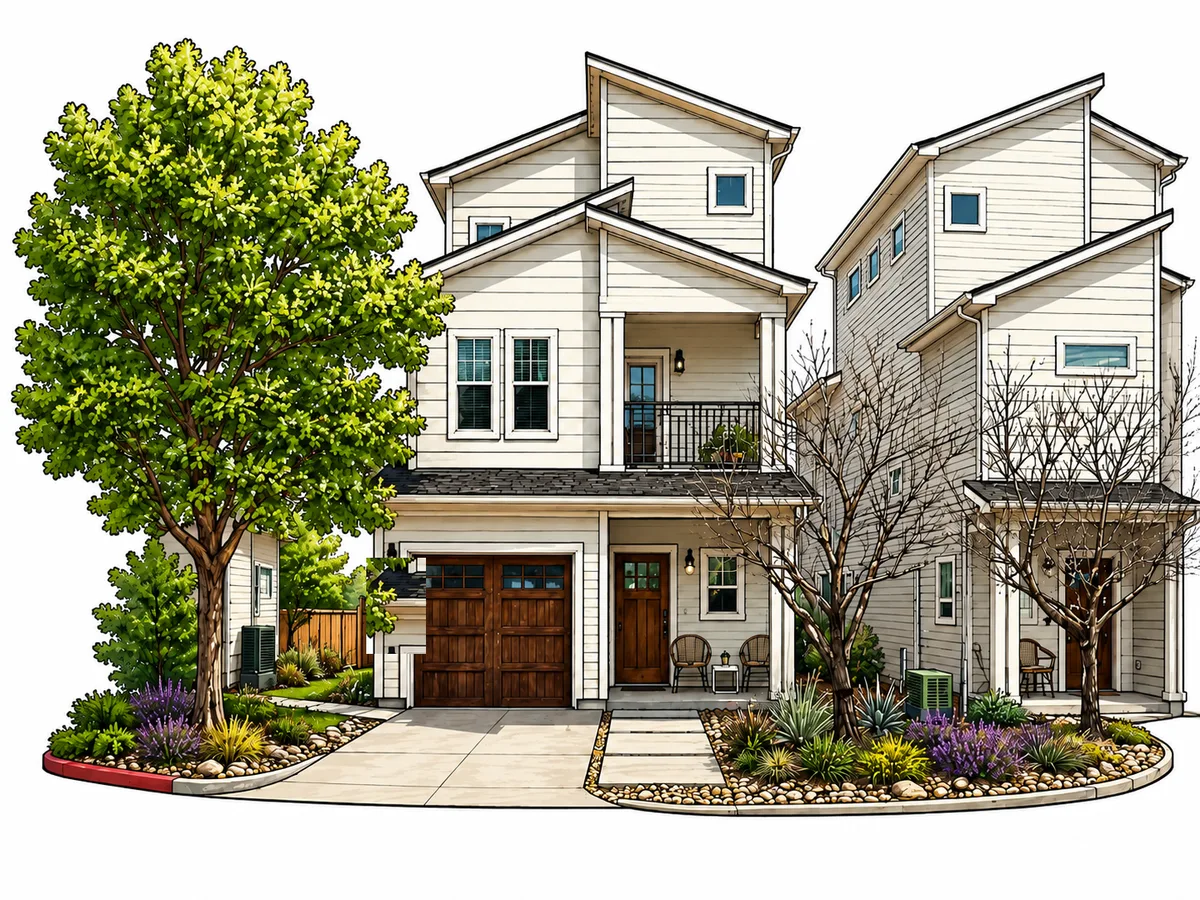
Cost segregation case study · Lookback

The Wren Hollow STR

2814 Wren Hollow Dr · placed in service Jan 1, 2023
Purchase price
$437K
Depreciable basis
$407K
Year-one deduction
$97K
ULV-2026-C64AEngineered review passedView the full study →
The Wren Hollow STR
Why this study reads the way it does

Already depreciating for three years — and cost seg still found a catch-up

This one is not a property that slipped through the cracks. The owner placed this East Austin short-term rental in service in January 2023, filed a return every year, and has correctly carried the building on a 27.5-year straight-line schedule since day one. Nothing was missed. A lookback still pays here, because straight-line is the slowestschedule the law allows — cost segregation reclassifies the building's short-life components into 5- and 15-year lives, and a §481(a) change of accounting method books the difference between that faster schedule and the three years already claimed as a single current-year catch-up. No amended returns.

The catch-up is a faster schedule, not a missing one

§481(a) catch-up $59,963 · Form 3115 · deductible this year $96,701
The three filed years of straight-line depreciation are real and stay claimed. The study recomputes the same building with cost-seg component lives, takes 80% bonus on the reclassified 5- and 15-year dollars at the 2023 placed-in-service rate, and books the gap — $59,963 — now, through Form 3115. On a $437,133 tax basis (land $30,497, depreciable $406,636), that lifts the deduction to $96,701 this year, including the $26,788 furnishing pool.

The 2025 additions ride their own schedules — nothing counted twice

11 measured rooms · 2025 HVAC and appliances untouched
Two capital additions landed after the property was already in service: a 2025 HVAC replacement on its own 27.5-year schedule and a washer and microwave already written off at 100% bonus on the 2025 return. Both stay on the ledger exactly as filed — they generate no catch-up, and the furnishing scan that itemizes the $26,788 pool from the listing photos is fenced off the appliances the return already expensed, so no dollar is claimed twice.
The lesson.A property already on a depreciation schedule is not past the point of cost segregation. Straight-line leaves the accelerated dollars sitting in the building; a lookback moves them to their proper lives and books every prior year's difference at once — and it does so without disturbing the additions the return already handled correctly.
Where the cash went

$437K in, split into land and building

The property was bought for $437,133. Land never depreciates, so it's carved out first; the building basis becomes the depreciable pool the study then accelerates.

Where the $437K went

Every dollar in, by where it landed. Land never depreciates; the building basis is what the study accelerates.
$437Ktotal spend
Land (never depreciates)$30,497 · 7%
Building basis (from purchase)$406,636 · 93%
Building $406,636 = $406,636 depreciable basis.
Inside the study

What the engine found

The deterministic engine separated the $406,636 depreciable basis into IRS recovery classes, then the engineered review confirmed every component against the source documents.

ULV-2026-C64A
Engineered review passed · 8 components, 3 sources
Depreciable basis$407K
Short-life reclass$88K · 22%
Year-one deduction$97K

Component allocation

$406,636 depreciable basis across MACRS recovery classes.
$407Kbasis
5-year personal property$55,169 · 14%
15-year land improvements$32,531 · 8%
39-year building shell$318,936 · 78%
Residential rental building $319KAppliances $23KCabinetry (non-permanent) $18KFencing $16KCarpet and flooring (non-pe… $12KLandscaping (depreciable) $10KDriveway and walkways $7KDecorative lighting $3K

Year one, in dollars

Two deductions stack in the first year.
Current-year depreciation$9,950
§481(a) catch-up (Form 3115)$86,751
Total year-one deduction$96,701
Straight-line without a study~$10,427/yr
About 9× more deduction pulled into year one than straight-line.

Depreciation by year

Year-one spike from bonus depreciation, then the building shell.
Year 1$69,913
Year 2$9,900
Year 3$9,219
Year 4$8,562
Year 5$8,562
Year 6$8,562
Year 7$8,562
Year 8$8,562
Year 9$8,562
Year 10$8,562
Year 11$8,562
Year 12$8,562
Year 13$8,370
Year 14$8,178
Year 15$8,178
Year 16$8,178
Year 17$8,178
Year 18$8,178
Year 19$8,178
Year 20$8,178
Year 21$8,178
Year 22$8,178
Year 23$8,178
Year 24$8,178
Year 25$8,178
Year 26$8,178
Year 27$8,178
Year 28$8,178
Year 29$8,178
Year 30$8,178
Year 31$8,178
Year 32$8,178
Year 33$8,178
Year 34$8,178
Year 35$8,178
Year 36$8,178
Year 37$341
Method. Allocations follow the IRS Cost Segregation Audit Techniques Guide, Rev. Proc. 87-56, and MACRS (Pub. 946), with the 80% bonus rate (placed in service 2023) applied to qualifying 5- and 15-year property. The engine produces the figures deterministically; AI is used only to sort and extract from uploaded documents. Every line cleared the engineered review.
State tax treatment

What each state does with this deduction

Each state this study touches, classified by how it treats the federal year-one deduction.

Texas (TX)No state income tax

No individual income tax; the federal deduction is the whole story for Texas.

Run on Unlevered · engineered review · ULV-2026-C64A