Cost segregation case study · Short-term rental

The Baldwin Park Bungalow
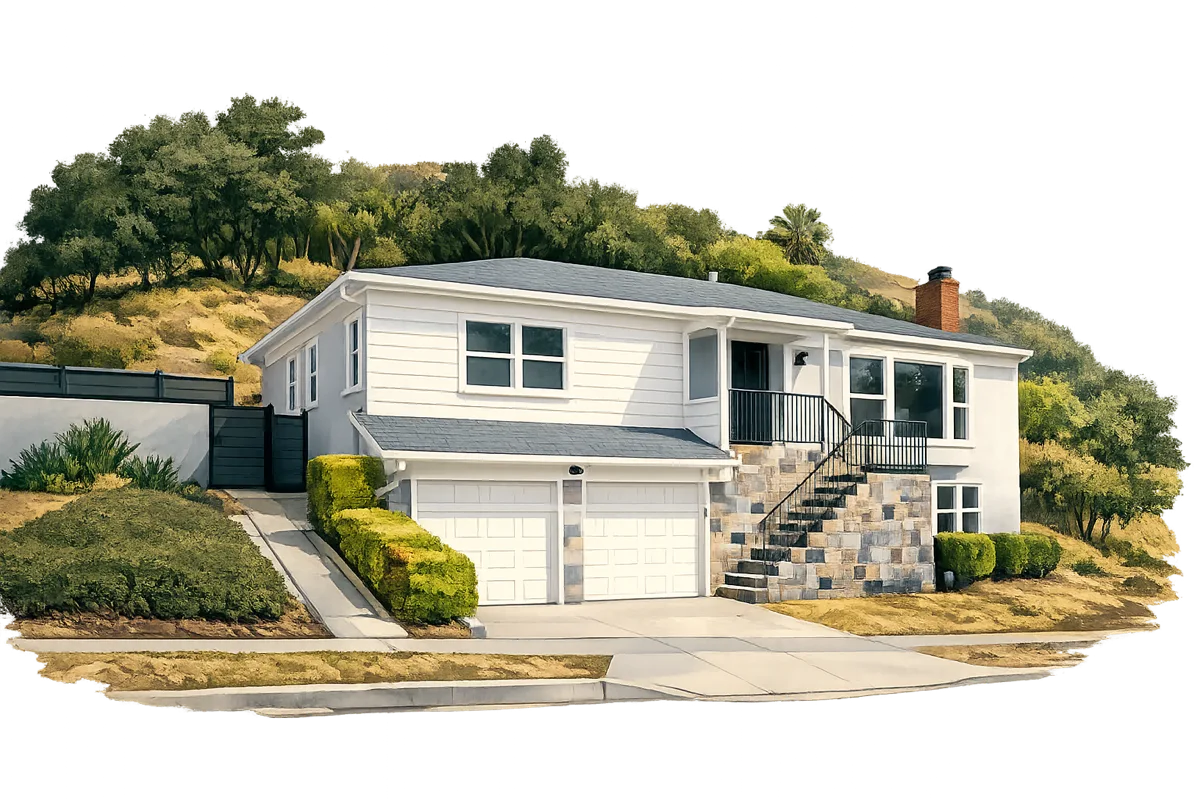
3614 Larkspur Court, Baldwin Park, CA 91706 · placed in service Jul 6, 2025
Purchase price
$1.08M
Depreciable basis
$194K
Year-one deduction
$29K
ULV-2025-3685Engineered review passedView the full study →
The Baldwin Park Bungalow
Why this study reads the way it does

Two dates in January decided this study

This is a real study. The owner closed on January 7, 2025 and started demolition two weeks later, and those two dates, set months before anyone thought about a tax return, decided what the study could and couldn’t do. The engine still found every dollar the facts support; the facts are what planning would have changed.

100% bonus, missed by thirteen days

Acquired January 7, 2025 · cutoff January 19, 2025
The 2025 tax law restored 100% bonus depreciation, but only for property acquired after January 19, 2025. This home closed on January 7. The engine applies the 40% phase-down rate instead, so every qualifying 5- and 15-year dollar takes 40% bonus in year one rather than all of it.

The remodel came before the rental existed

Demolition January 21, 2025 · placed in service July 6, 2025
Demolition began January 21, but the home didn’t enter service as a rental until July 6. Components torn out before a property is ever placed in service have no in-service basis to write off, so there is no partial-disposition deduction here. Sequenced the other way (in service first, then remodel), the removed components’ remaining basis becomes a separate year-one write-off.
The lesson. Both rules are date-driven and knowable in advance. An acquisition pushed two weeks, or a remodel sequenced after placed-in-service, changes the year-one outcome. This is what planning a study before you buy or swing a hammer looks like, not at filing time.
Where the cash went

$1.08M in, split into land and building

The property was bought for $1,079,600. Land never depreciates, so it's carved out first; the building basis becomes the depreciable pool the study then accelerates.

Where the $1.08M went

Every dollar in, by where it landed. Land never depreciates; the building basis is what the study accelerates.
$1.08Mtotal spend
Land (never depreciates)$490,678 · 45%
Building basis (from purchase)$588,922 · 55%
Building $588,922 × 33% rental use = $194,344 depreciable basis.
Inside the study

What the engine found

The deterministic engine separated the $194,344 depreciable basis into IRS recovery classes, then the engineered review confirmed every component against the source documents.

ULV-2025-3685
Engineered review passed · 45 components, 4 sources
Depreciable basis$194K
Short-life reclass$56K · 29%
Year-one deduction$29K

Component allocation

$194,344 depreciable basis across MACRS recovery classes.
$194Kbasis
5-year personal property$34,005 · 17%
15-year land improvements$22,167 · 11%
39-year building shell$138,172 · 71%
Exterior Wall Construction,… $18KGeneral HVAC System, Zoned … $18KConcrete Slab $10KFoundation, Piers and Beams $10KStrip 1/2", Hardwood Floori… $10KInterior Plumbing Supply & … $10KInterior Partitions, Gypsum… $8KGeneral Building Electrical… $8K

Year one, in dollars

Accelerated depreciation, taken in year one.
Accelerated depreciation$28,838
Total year-one deduction$28,838
Straight-line without a study~$4,983/yr
About 6× more deduction pulled into year one than straight-line.

Depreciation by year

Year-one spike from bonus depreciation, then the building shell.
Year 1$28,838
Year 2$11,335
Year 3$8,597
Year 4$6,917
Year 5$6,815
Year 6$5,547
Year 7$4,328
Year 8$4,328
Year 9$4,329
Year 10$4,328
Year 11$4,329
Year 12$4,328
Year 13$4,329
Year 14$4,328
Year 15$4,329
Year 16$3,935
Year 17$3,543
Year 18$3,543
Year 19$3,543
Year 20$3,543
Year 21$3,543
Year 22$3,543
Year 23$3,543
Year 24$3,543
Year 25$3,543
Year 26$3,543
Year 27$3,543
Year 28$3,543
Year 29$3,543
Year 30$3,543
Year 31$3,543
Year 32$3,543
Year 33$3,543
Year 34$3,543
Year 35$3,543
Year 36$3,543
Year 37$3,543
Year 38$3,543
Year 39$3,543
Year 40$1,918
Method. Allocations follow the IRS Cost Segregation Audit Techniques Guide, Rev. Proc. 87-56, and MACRS (Pub. 946), with the 40% bonus rate (placed in service 2025) applied to qualifying 5- and 15-year property. The engine produces the figures deterministically; AI is used only to sort and extract from uploaded documents. Every line cleared the engineered review.
State tax treatment

What each state does with this deduction

Each state this study touches, classified by how it treats the federal year-one deduction.

California (CA)Bonus decoupled
State still allows the deduction, but delays part of it.
$28,838
Federal year-one deduction
$9,533
California year-one deduction
$19,305
Added back this year, recovered later

Lifetime difference: $0. Timing only, recovered in later years.

CA defers $19,305 of the deduction in year one, then returns it over the following years, reaching $0 by year 14. The lifetime deduction is the same; only the timing differs.

Deferred in year one Still to be recovered, by year

You still get the federal deduction now. California taxable income is $19,305 higher than federal in year one, but that amount is deducted in later years.

Filing action

Use the federal schedule for the federal return and a California recomputation schedule for the CA return.

Schedule: CA FTB 3885A

Run on Unlevered · engineered review · ULV-2025-3685