Cost segregation case study · Lookback
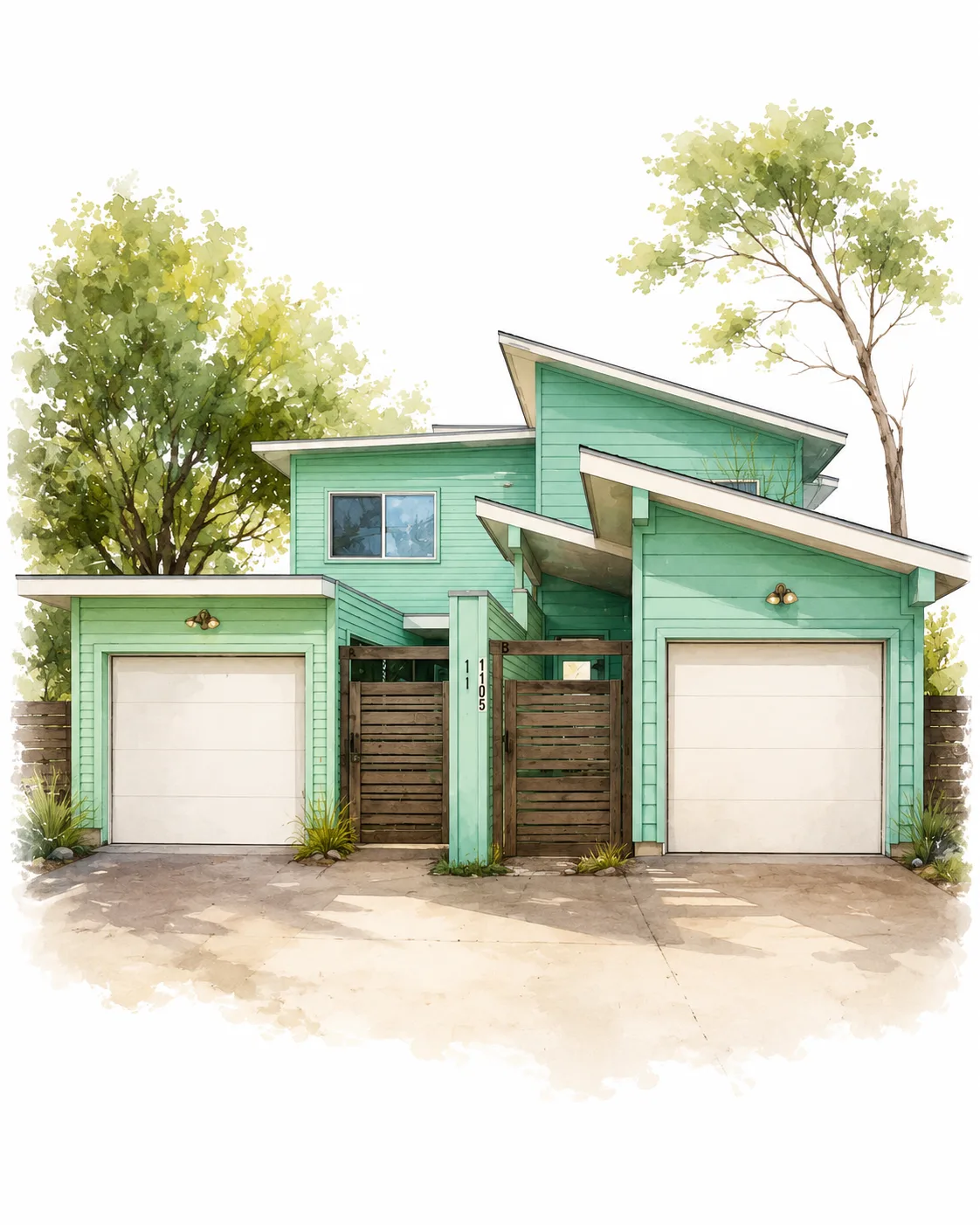
The Palma Vista Unit B
1509 Palma Vista Ave Unit B · placed in service Apr 16, 2013
Why this study reads the way it does
Thirteen years on the sidelines, recovered in one filing
The owner bought this East Austin unit in 2012 and has run it as a short-term rental since April 2013. In thirteen years he never claimed a dollar of depreciation: no schedule, no cost segregation, nothing. A lookback study recomputes the property the way it should have read from day one and books the entire shortfall now, through Form 3115, with no amended returns.
Every missed year lands at once
§481(a) catch-up via Form 3115 · deductible this year $189,842
A change in accounting method lets the study take all thirteen years of never-claimed depreciation, at the accelerated 5- and 15-year lives cost segregation supports, as a single catch-up in the current year. On a $314,990 purchase with a $251,992 depreciable basis, that is $189,842 deductible this year.
The furniture is itemized from his own photos
84 items · $45,710 · brand pricing only where a brand is visible
No furnishing receipts survived thirteen years, so the scan reads the listing photos room by room (an item seen in three frames counts once) and prices each item at conservative catalog replacement value. Where a photo actually shows a brand, the item prices at brand tier; everything else stays generic. All $45,710rides the same catch-up, since the furnishings date to the rental's start.
The lesson. Depreciation you never claimed is not gone. A lookback books it in one filing, and the longer the property has run, the larger the catch-up; waiting thirteen years cost this owner use of the money, not the deduction itself.
Where the cash went
$315K in, split into land and building
The property was bought for $314,990. Land never depreciates, so it's carved out first; the building basis becomes the depreciable pool the study then accelerates.
Where the $315K went
Every dollar in, by where it landed. Land never depreciates; the building basis is what the study accelerates.
Land (never depreciates)$62,998 · 20%
Building basis (from purchase)$251,992 · 80%
Building $251,992 = $251,992 depreciable basis.
Inside the study
What the engine found
The deterministic engine separated the $251,992 depreciable basis into IRS recovery classes, then the engineered review confirmed every component against the source documents.
ULV-2026-EFA8
Engineered review passed · 55 components, 4 sources
Depreciable basis$252K
Short-life reclass$89K · 35%
Year-one deduction$190K
Component allocation
$251,992 depreciable basis across MACRS recovery classes.
5-year personal property$62,831 · 25%
15-year land improvements$26,454 · 10%
39-year building shell$162,707 · 65%
Exterior Wall Construction,… $23KGeneral HVAC System, Zoned … $23KConcrete Slab $13KFoundation, Piers and Beams $13KWood Deck - Freestanding $13KInterior Plumbing Supply & … $12KInterior Partitions, Gypsum… $11KGeneral Building Electrical… $11K
Year one, in dollars
Two deductions stack in the first year.
| Current-year depreciation | $5,733 |
| §481(a) catch-up (Form 3115) | $184,109 |
| Total year-one deduction | $189,842 |
| Straight-line without a study | ~$6,461/yr |
About 29× more deduction pulled into year one than straight-line.
Depreciation by year
Year-one spike from bonus depreciation, then the building shell.
| Year 1 | $144,132 |
| Year 2 | $5,735 |
| Year 3 | $4,952 |
| Year 4 | $4,172 |
| Year 5 | $4,172 |
| Year 6 | $4,172 |
| Year 7 | $4,172 |
| Year 8 | $4,172 |
| Year 9 | $4,172 |
| Year 10 | $4,172 |
| Year 11 | $4,172 |
| Year 12 | $4,172 |
| Year 13 | $4,172 |
| Year 14 | $4,172 |
| Year 15 | $4,172 |
| Year 16 | $4,172 |
| Year 17 | $4,172 |
| Year 18 | $4,172 |
| Year 19 | $4,172 |
| Year 20 | $4,172 |
| Year 21 | $4,172 |
| Year 22 | $4,172 |
| Year 23 | $4,172 |
| Year 24 | $4,172 |
| Year 25 | $4,172 |
| Year 26 | $4,172 |
| Year 27 | $1,217 |
Method. Allocations follow the IRS Cost Segregation Audit Techniques Guide, Rev. Proc. 87-56, and MACRS (Pub. 946), with the 0% bonus rate (placed in service 2026) applied to qualifying 5- and 15-year property. The engine produces the figures deterministically; AI is used only to sort and extract from uploaded documents. Every line cleared the engineered review.
State tax treatment
What each state does with this deduction
Each state this study touches, classified by how it treats the federal year-one deduction.
Texas (TX)No state income tax
No individual income tax; the federal deduction is the whole story for Texas.
Run on Unlevered · engineered review · ULV-2026-EFA8